16 Jan 2012 9 am eastern

Ding dong, SOPA is dead.

DING DONG, THE WITCH IS DEAD. For now, at least, the “ill-conceived lobbyist-driven piece of legislation” known as the Stop Online Piracy Act (SOPA) is no more:

Misguided efforts to combat online privacy have been threatening to stifle innovation, suppress free speech, and even, in some cases, undermine national security. As of yesterday, though, there’s a lot less to worry about.

…Though the administration did [not] issue a formal veto threat, the White House’s opposition signaled the end of these bills, at least in their current form.

A few hours later, Congress shelved SOPA, putting off action on the bill indefinitely.

Political Animal – Putting SOPA on a shelf

Filed under: Design, State of the Web, The Essentials, Web Design, Web Design History, Web Standards

11 Jan 2012 10 am eastern

Selling Design – an online reading list

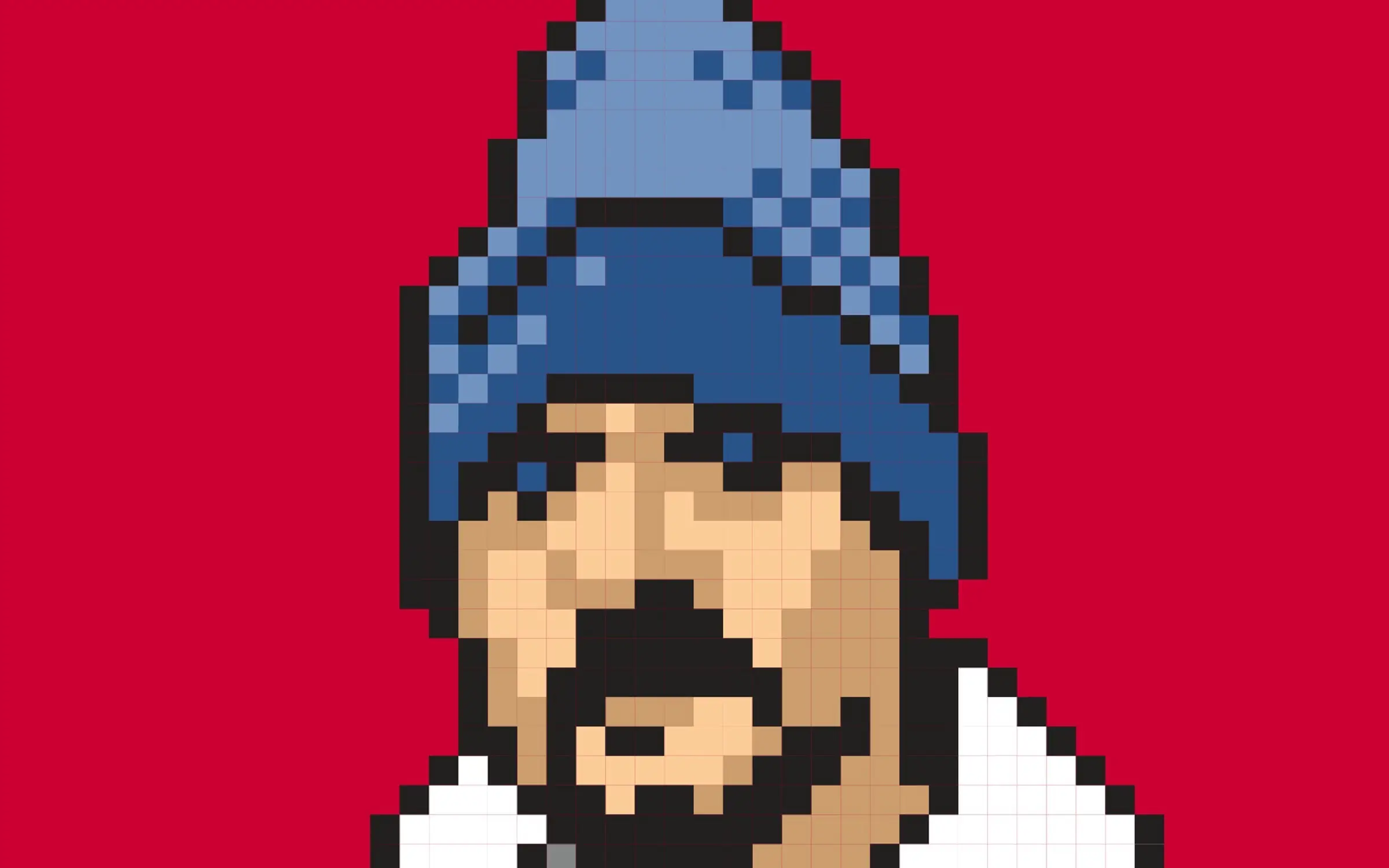
TOMORROW, WHICH IS also my birthday, I begin teaching “Selling Design” to second-year students in the MFA Interaction Design program at School of Visual Arts, New York. Liz Danzico and Steve Heller created and direct the MFA program, and this is my second year teaching this class, whose curriculum I pull out of my little blue beanie.

In this class we explore collaboration and persuasion for interaction designers. Whether you work in a startup, studio, or traditional company; whether you design print, products, purely digital experiences, or any combination thereof; whether you’re the sole proprietor, part of a tightly focused team, or a link in a long chain of connected professionals, it is only by collaborating skillfully with others—and persuading them tactfully and convincingly when points of view differ and yours is right—that you can hope to create designs that make a dent in the universe.

During this spring semester, we’ll explore collaboration and persuasion from many points of view, and hear from (and interact with) many accomplished designers who will serve as special guest speakers. For our opening get-acquainted session, we’ll focus on texts that explore the some of the most basic, traditional (and rarely taught) aspects of design professionalism from the worlds of web, interaction, and print design:

Demystifying Design

by Jeff Gothelf – A List Apart

  1. Draw together
  2. Show raw work (frequently)
  3. Teach the discipline
  4. Be transparent
  5. Take credit for your wins

Design Criticism and the Creative Process

by Cassie McDaniel – A List Apart

  • Critique as collaborative tool
  • Presenting designs
  • What is good feedback?
  • Negotiate criticism
  • The designer as collaborator

Personality in Design

by Aarron Walter – A List Apart

  • Personality is the platform for emotion
  • A history of personality in design
  • Personas
  • Creating a design persona for your website [or other project]
  • Tapbots: Robot love
  • Caronmade: octopi, unicorns, and mustachios
  • Housing Works: a name with a face
  • The power of personality

Design Professionalism

by Andy Rutledge

You should read this entire brief book, but for now, sample these bits:

Do You Suck at Selling Your Ideas?

by Sam Harrison – HOW Magazine

Dyson is used as an example of a product that currently dominates the market, even though nobody initially believed in the inventor’s idea. Lessons:

  1. Tell a personal story
  2. Create emotional experiences for decision makers
  3. See what’s behind rejections

How to sell your design effectively to the client

by Arfa Mirza, Smashing Magazine

  1. Understand the nature of your client
  2. Have a rationale for every part of your design
  3. Show the best design options only
  4. Defend your design, but don’t become defensive
  5. Solicit good feedback and benefit from it

Money: How to sell the value of design – an email conversation

by Jacob Cass – Just Creative

Narrative of standing up to new-client pressure to do something against the designer’s self-interest, or which devalues design. Story told here is about money but it could be about any designer/client conflict in which the designer needs to gently educate the client. (Some designer/client conflicts require the client to educate the designer, but that’s another matter.)

How to choose a logo designer

by Jacob Cass – Just Creative

Basic article outlines ten background materials any designer (not just logo designers) should prepare to encourage confidence on the client’s part:

  1. Experience
  2. Positive testimonials
  3. A thorough design process
  4. Awards won/published work
  5. A strong portfolio
  6. Price
  7. Design affiliations
  8. Great customer service
  9. Business Professionalism
  10. Appropriate questions

Filed under: "Digital Curation", Advocacy, Best practices, business, Career, Design, SVA, Teaching, The Essentials, The Profession

30 Dec 2011 9 am eastern

The maker makes: on design, community, and personal empowerment

THE FIRST THING I got about the web was its ability to empower the maker. The year was 1995, and I was tinkering at my first website. The medium was raw and ugly, like a forceps baby; yet even in its blind, howling state, it made me a writer, a designer, and a publisher — ambitions which had eluded me during more than a decade of underachieving desert wanderings.

I say “it made me” but I made it, too. You get the power by using it. Nobody confers it on you.

I also got that the power was not for me alone: it was conferred in equal measure on everyone with whom I worked, although not everyone would have the time or desire to use the power fully.

The luckiest makers

Empowerment and desire. It takes extraordinary commitment, luck, and talent to become a maker in, say, music or film, because the production and distribution costs and risks in these fields almost always demand rich outside investors and tightly controlling corporate structures. (Film has held up better than music under these conditions.)

Music and film fill my life, and, from afar, I love many artists involved in these enterprises. But they are mostly closed to you and me, where the web is wide open, and always has been. We all know gifted, hard working musicians who deserve wide acclaim but do not receive it, even after decades of toil. The web is far kinder to makers.

To care is to share

Not only does the web make publishers of those willing to put in the work, it also makes most of us free sharers of our hard-won trade, craft, and business secrets. The minute we grab hold of a new angle on design, interaction, code, or content, we share it with a friend — or with friends we haven’t met yet. This sharing started in news groups and message boards, and flowered on what came to be called blogs, but it can also slip the bounds of its containing medium, empowering makers to create books, meet-ups, magazines, conferences, products, you name it. It is tough to break into traditional book publishing the normal way but comparatively easy to do it from the web, provided you have put in the early work of community building.

The beauty is that the community building doesn’t feel like work; it feels like goofing off with your friends (because, mostly, it is). You don’t have to turn your readers into customers. Indeed, if you feel like you’re turning your readers into customers, you’re doing it wrong.

If you see a chance, take it

The corollary to all this empowerment is that it’s up to each of us to do something positive with it. I sometimes become impatient when members of our community spend their energy publicly lamenting that a website about cats isn’t about dogs. Their energy would be so much better spent starting bow-wow.com. The feeling that something is missing from a beloved online resource (or conference, or product) can be a wonderful motivator to start your own. I created A List Apart because I felt that webmonkey.com wasn’t enough about design and highfive.com was too much about it. If this porridge is too hot and that porridge is too cold, I better make some fresh, eh?

I apologize if I sometimes seem snippy with whiners. My goal is never to make anyone feel bad, especially not anyone in this community. My message to my peers since the days of “Ask Dr Web” has always been: “you can do this! Go do it.” That is still what I say to you all.

Filed under: Best practices, Brands, business, Ideas, parenting, Respect, Self-Employment, Standards, Startups, State of the Web, The Essentials, Web Design, Web Design History, wisdom, zeldman.com

29 Dec 2011 12 pm eastern

State of the web: of apps, devices, and breakpoints

IN The ‘trouble’ with Android, Stephanie Rieger points out the ludicrous number of Android screen sizes on a typical UK client’s website and comes to this conclusion:

If … you have built your mobile site using fixed widths (believing that you’ve designed to suit the most ‘popular’ screen size), or are planning to serve specific sites to specific devices based on detection of screen size, Android’s settings should serve to reconfirm how counterproductive a practice this can be. Designing to fixed screen sizes is in fact never a good idea…there is just too much variation, even amongst ‘popular’ devices. Alternatively, attempting to track, calculate, and adjust layout dimensions dynamically to suit user-configured settings or serendipitous conditions is just asking for trouble.

I urge you to read the entire article—it’s brief yet filled with rich chocolatey goodness.

Responding to it, Marc Drummond concludes that responsive web design default breakpoints are dead and urges designers to “use awkwardness as your guideline, not ephemeral default device widths” and return to fluid design. (I believe he may actually be thinking of liquid layout—the kind we practiced back in the early mid-1990s when cross-platform and multi-manufacturer desktop screen sizes and pixel-per-inch ratios—not to mention strong user font, size, and color preference options—made fixed-width layout design challenging if not impossible. As I understand fluid design, it is merely another word for responsive design, in that it relies on CSS3 media queries set to breakpoints.)

We’ve lost our compass

Rieger and Drummond are hardly alone in feeling that “our existing standards, workflows, and infrastructure” cannot support “today’s incredibly exciting yet overwhelming world of connected digital devices” (futurefriend.ly) and that something new must be done to move the web forward. And of course ppk has been warning us about the multiplicity of platforms and viewports on mobile since 2009.

Agreed: that is an exciting and challenging time; that fixed width layouts do not address, and adaptive layouts (multiple fixed-width layouts set to common breakpoints) do not go far enough in addressing, the challenges posed by our current plethora of mobile screen sizes, zoom settings, embedded views (i.e. “browser” windows inside app windows, often with additional chrome) and what Rieger calls “the unintended consequences” that occur as these various settings clash in ways their creators could not have anticipated.

As consumers, we’ve all had the experience of seeing the wrong layout at the wrong time. (Think of a site with both mobile and desktop versions—whether these versions are triggered by CSS3 media queries or JavaScript and back-end magic is beside the point because technology is beside the point—good user experience is all this is supposed to be about. On a Twitter app on a mobile device, the user follows a link; the link opens in the browser built into the Twitter app. Which version of the site does the user see? The mobile one or the desktop? Often it is the desktop, and that can be a problem if the app’s version of the browser does not permit zoom. Even if it is a mobile version, it may be the wrong mobile version, or it may not fit comfortably inside the app’s browser window.) Considering our own experiences and reviewing Rieger’s chart, it is easy to share Drummond’s conclusion that breakpoints are dead and that all sites should be designed as minimally as possible.

If breakpoints are dead, responsive design is dead

Of course, if breakpoints are dead, responsive design is dead, because responsive design relies on breakpoints both in creative workflow and as a key to establishing user-need-and-context-based master layouts, i.e. a minimal layout for the user with a tiny screen and not much bandwidth, a more fleshed-out one for the netbook user, and so on.

But responsive design is not dead; it has only begun. It is not a panacea but was never intended to be. It is simply the beginnings of an approach.

I respect those colleagues who say breakpoints are dead, understand how they reached this conclusion, and am eager to see where it takes them in the coming months as they experiment with new methods, perhaps developing wonderful and unforeseen best practices. I hope design will be a brilliant part of these new methods, not something that gets abandoned to create a bland but workable lightweight experience for all.

But I also believe it is possible to draw a different conclusion from the same data. It is even possible, I believe, to say the present data doesn’t matter—at least not in the long run.

Tale of the chart

There was a time in the late 1990s when industrious web designers showed how atrocious CSS support was in browsers. Eric Meyer’s Master Compatability Chart for Web Review, formerly at http://www.webreview.com/pub/wr/style/mastergrid.html, was one of the best, but is no longer available for your historical viewing pleasure—not even at the mighty Wayback Machine. That’s too bad, as it would have perfectly illustrated my point. The chart used a variety of colors to show how each detail of the entire CSS specification was or was not supported (and if supported, whether it was supported correctly and completely, partially and correctly, partially and somewhat incorrectly, or completely incorrectly) in every browser which was available at the time, including, if memory serves, close to a dozen versions of Netscape, Explorer, and Opera.

Looking at that chart induced nausea and vertigo. It was easy to draw the conclusion that CSS wasn’t ready for primetime. (That was the correct conclusion at the time.) It was also easy to look at the table and decide that table layouts and font tags were the way to go.

That’s what most designers who even bothered looking at Eric’s chart decided, but a few (Eric and me included) drew a completely other inference. Instead of trying to memorize all the things that could go wrong in each browser, we created general rules for what worked across all browsers (e.g. font-size in px, floats for layout) and advocated design based on the things that work. This, I believe, is exactly what the futurefriend.ly and Move the Web Forward folks are doing now: trying to figure out commonalities instead of bogging down in details. (This is why some in our community have labeled futurefriend.ly and Move the Web Forward “WaSP II.”)

The other inference Eric, I, and others in the 1990s drew from Eric’s chart was that browser makers must be petitioned to support CSS accurately and correctly. We and many of you reading this engaged in said petitioning, and thanks largely to help from with the browser engineering community (from people like Tantek Çelik and Chris Wilson and organizations like Mozilla) it came to pass.

Of mice and markets

We cannot, of course, petition all the makers of, say, Android devices to agree to a set of standard breakpoints, because there are over 500 different Android devices out there, many of which will fail in the coming months—or if not outright fail, simply be replaced in the course of planned obsolescence AKA upgrading that drives the hardware segment. And each new product will in turn introduce new incompatibilities (AKA “features”).

In the short run it’s going to be hell, just as the browser wars and their lack of support for common standards were hell. But it is the short run.

500 standards is no standard. Give a consumer 500 choices and the price-driven consumer picks what comes with her plan, while the selective consumer begins gravitating toward a handful of emerging market leaders. Eventually this nutty market will stabilize around a few winning Android platforms (e.g. Kindle Fire) and common breakpoints will emerge. What The Web Standards Project achieved with browser makers, the market will achieve with phones.

Until that time, designers certain can abandon breakpoints if they can find a way to do good design under purely fluid conditions—design that pleases the user, satisfies the client, and moves the industry forward aesthetically. But designers who persist in responsive or even adaptive design based on iPhone, iPad, and leading Android breakpoints will help accelerate the settling out of the market and its resolution toward a semi-standard set of viewports. This I believe.

When I see fragmentation, I remind myself that it is unsustainable by its very nature, and that standards always emerge, whether through community action, market struggle, or some combination of the two. This is a frustrating time to be a web designer, but it’s also the most exciting time in ten years. We are on the edge of something very new. Some of us will get there via all new thinking, and others through a combination of new and classic approaches. Happy New Year, web designers!

Filed under: Applications, apps, Responsibility, Responsive Web Design, State of the Web, The Essentials, UX, Web Design, Web Design History, Web Standards, Websites

20 Dec 2011 7 am eastern

My glamorous life: some holiday!

THIS WEEK I will finally sign my divorce papers. It’s like that old Woody Allen joke, “The food here is terrible – and such small portions.” I didn’t want to get divorced, and I’ve been waiting two years to do it. It’s a friendly little divorce that started out as a simple mediated settlement, but we made the mistake of hiring lawyers. The legal bloodletting around the Beatles’ breakup took less time and surely cost less. But here we finally are, about to sign papers that enshrine our daughters’ rights and our rights as parents and put into stark English the courtesies my ex and I would naturally extend each other anyway.

That’s Wednesday, unless it’s Tuesday (my lawyer can’t seem to keep track of which day we’re meeting), and Wednesday also there is a school field trip I chaperone to I don’t remember where, and somehow between the field trip and the review and signing of the divorce papers I hire a team to gut and rewire our new A Space Apart office on Madison Avenue, arrange for two internet services to wire our 19th century building, and order the furniture.

Today I take the kid to school, meet about wireframes for the A List Apart redesign, interview Khoi Vinh for The Big Web Show, meet about a Happy Cog redesign, and run back to school for the kid. Somewhere in there I get a meal. Thursday, blessed relief, I’m in Philadelphia for a holiday party (yay!), and Friday my Dad and his bride arrive.

In short, it is a week like any other.

Since I started my first business with two nickels and a Power Computing Mac clone, I have not had a week that would pass for normal, if normal means manageable. The last predictable week I had was my first week in AA in May of 1993, although that certainly wasn’t usual in that sweating and shivering and coming to God (in other words, quitting drinking) isn’t a normal or even expected event in an alcoholic’s life. But that week did find me in the same room in the same city doing the same thing for five days straight — surely the last time that happened, if you don’t count those four days in Disney World.

I’m a boring guy, but my life has conspired to be interesting. Members of my inner circle who have access to my calendar get ulcers just from looking. And for all that constant change and growth, although somewhat stressed, I am most grateful.

Filed under: glamorous, The Essentials

Comments off.

29 Nov 2011 11 am eastern

Say No to SOPA!

A LIST APART strongly opposes USHR 3261 AKA the Stop Online Piracy Act (SOPA), an ill-conceived lobbyist-driven piece of legislation that is technically impossible to enforce, cripplingly burdensome to support, and would, without hyperbole, destroy the internet as we know it.

SOPA approaches the problem of content piracy with a broad brush, lights that brush on fire, and soaks the whole web in gasoline. Learn why SOPA must not pass, and find out what you can do to help stop it.

A List Apart: Articles: Say No to SOPA.


Illustration by Kevin Cornell for A List Apart Magazine.

Filed under: Design, industry, Platforms, Responsibility, Standards, State of the Web, The Essentials

Comments off.

26 Jul 2011 1 pm eastern

Downtime at Disney World

DAY TWO, mid-day, taking a breather in our hotel room. Listening to my daughter play with her tiny new Disney figurines. In the distance, the gull-like shrieks of children in the hotel pool.

Filed under: glamorous, The Essentials

Comments off.

22 Jul 2011 12 pm eastern

My week on narcotics

THE DREAMS YOU HAVE when you’re withdrawing from narcotics make David Lynch look like an After School Special hack. How I got on narcotics was outpatient, noninvasive surgery on a double hernia. I got the double hernia from a mistake I made in the gym, or maybe I slipped in the bath and caught myself funny and ripped open my abdominal wall in two places without knowing it.

Doctors dump all this useless data on you and tell you nothing you need to know. Before the surgery I was given a 40 page disclaimer about my privacy rights and how hospitals use and share my medical information. I reckon I was given this because someone sued someone else once. Flash to the medical community: I want you to share my info. That’s what databases and XML and the internet are for. If I fall down a staircase in Katmandu, I want the emergency medical team that rescues me to know I’m allergic to penicillin, and I want the doctor who attends me to know what medicines I take. Thank you for the lovely 40 page disclaimer.

And no thank you for what I left the hospital with: a prescription and nothing else. After all that upfront paperwork, the hospital didn’t even bother giving me my surgeon’s name and phone number. (I had to look them up on the web when my painkiller prescription ran out.)

Here’s some information the hospital could have given me: your peas and carrots are going to swell up and look more like eggplants and cauliflower. That’s normal and you don’t need to call in. For at least five days, you’ll feel like someone just cut you open with a street knife. That’s normal and you don’t need to call in. Your sleep will be fitful, with wild dreams. You’ll wake up at 2:00 AM and 5:00 AM, unable to sleep. If you take the prescription pain killers, your sleep will be even more disrupted. The pain killers don’t so much take away the pain as move it slightly off-camera. You’ll want to take more than we give you and your digestive system will resemble that of a hardcore junkie within two days. All of this is normal. After five days, we cut off the pain killers and provide no way for you to get more. But you’ll still be in terrible pain. This is normal.

If they had told me that in the hospital and written it down somewhere, I wouldn’t have worried so much when parts of my body started resembling clubbed baby seals and seemed to be undergoing racial transmutation. While they were at it, they could have left me a card with my surgeon’s phone number and asked me to call in after four days for an evaluation.

They wanted to evaluate me next week, but I’m taking my daughter to Disney World next week, so instead they’ll see me when the surgeon returns from vacation on August 15. Meantime, I guess I muddle through.

I’m not on narcotics today and the pain is bad but manageable with Advil. I haven’t had that shit or any shit in my system for nearly 20 years, and I don’t like how close it brings me to the old days. I can get my prescription refilled by begging the surgeon’s answering service until eventually he calls the pharmacy, but I think maybe I’ll stick with Advil.

Filed under: Existence, glamorous, The Essentials, Zeldman

Comments off.

8 Jul 2011 10 am eastern

How could I refuse?

Message:

To Whom it may Concern,

I recently discovered your “Home” page here:

http://www.zeldman.com/2010/10/17/ipad-as-the-new-flash/

Would you please consider adding a link to my website called Job-Applications.com? It is a resource that provides hundreds of printable and online applications for retail stores, department stores, pharmacies, grocery stores, restaurants, shops, etc. Its a great way for people to find part time and full time work quickly.

If you think it would be of use to your visitors, would you please consider adding a link to my website on your page here:

http://www.zeldman.com/2010/10/17/ipad-as-the-new-flash/

Here is the HTML link you could add: Job-Applications.com – Find hundreds of online applications and printable job forms.

Please let me know if you have any questions.

Thanks!

[Name withheld]

Filed under: Best practices, business, The Essentials

Comments off.

1 Jul 2011 11 am eastern

Cameron Diaz and Me

THE FIRST PART has long been known:

Saw Cameron Diaz on her way to the gym. I was wearing the shirt I’d slept in, walking my dog, holding a bag of shit.

Now, here’s the rest of the story:

My dog, a mangy old rescue Shih Tzu named Emile, had finished his business and was investigating a sidewalk gum wad. He loved sniffing filthy things on the street, and Midtown Manhattan was always happy to oblige. As was my routine, I monitored his activities closely, partly out of horrified fascination, and mainly to make sure he didn’t choke or poison himself.

Typically this activity required my full attention, or at least that part of my attention that wasn’t lost contemplating family and business anxieties, petty resentments, and the recollected snippets of imagery, music, and dialogue that pass for thought. But today, for some reason, I looked away as Emile tackled an apparently sumptuous abandoned cigarette filter. As if spellbound, my eyes crossed two streets to hone in on a couple that was briskly heading my way.

The man in the couple wore gym clothes, and seemed to be speaking quickly, with huge animated arm gestures. But it wasn’t the man who had made me look up from my dog’s debauchery.

At least a head taller than her companion, wearing skimpy gym clothes, the woman appeared athletic and radiant, even from this distance—too far away to see faces. Instead of moving on to discourage Emile from his sidewalk shenanigans, I stood rooted to the spot, waiting as the couple came closer and closer. A fancy gym was nearby, I knew—not from going there myself, but because a friend did, and it was a magnet for activity on this block.

As the couple came closer, the woman lost none of her allure, and I became self-conscious about staring. Not because I felt fat, old, dirty, and tired—a middle-aged man holding a bag of shit, walking an ailing Shih Tzu with a penchant for street turds and candy wrappers—but because it’s rude to stare. It’s rude to stare at the unfortunate: their hand-me-downs, their hopeless haunted eyes. It’s also rude to stare at the genetically blessed, the gorgeous, the toned, the fertile, famous, and wealthy. I still had not recognized Cameron Diaz, but she radiated fabulousness.

So I did what any eldest son raised by my late mother would do: as the couple came closer and closer, I focused my attention on the man. So as not to make the lady uncomfortable, you see. (From this fragment of mental DNA, you should be able to reconstruct me completely.)

So here they were, now on my block, now halfway up the block to me, now almost within arm’s reach.

And there I was, with my dog and my shit bag and my eyes firmly trained on the male half of the couple.

Who was either a gym buddy or personal trainer but definitely not a boyfriend, I gathered from their body language with respect to each other, and especially from his smiling quick speech and big sweeping arm gestures, which vibed “consultant meeting an important client” and perhaps Italian-American and maybe also gay. If I was right about that last bit, my staring at him for the past five minutes didn’t worry me, but it might be freaking him out. At any rate, that was my cover story to myself for what I did next.

For the couple was now an arm’s length away, about to pass out of my sight forever. And while I had been working hard to respect the lady by not telegraphing waves of hopeless lust, if I didn’t steal one more glance right now, I would never see her again, never even know what she really looked like up close.

My eyes slid toward her of their own accord, and as they landed, I saw that her smiling, knowing, superior but also playfully flirtatious eyes were locked on mine. She had been watching me studiously avoid looking at her, waiting for the inevitable collapse of my will, the moment when I could no longer resist. “Busted,” her eyes said. “You didn’t fool me for one minute. Yes, it’s me. Nice meeting you. Bye.”

And then, with a taunting but also pleasing smirk, she was gone. And two things hit me:

  1. That was Cameron Diaz.
  2. And she can read minds.

Filed under: Existence, experience, glamorous, New York City, The Essentials, The Mind

Comments off.